A boundary does more than show where your land ends. It holds stock in, keeps deer and stray dogs out, filters wind, shelters a young orchard and gives a smallholding its shape. Choose well and the fence, hedge or wall quietly disappears into the background for twenty years. Choose badly and you will be walking it with a hammer and a pocketful of staples every spring. The four rural standbys — hedge, post-and-rail, stock netting and dry stone — solve quite different problems. Here is how to work out which one you are facing.
Before you price anything, write down what the line must actually achieve. Contain which animals, and at what age? A gap that stops a ewe will not stop her lamb. Exclude anything else — rabbits, deer, the neighbour's collie? Shelter or screen: are you after a windbreak, privacy, or something to hide a muck heap? Does it need to mark a legal boundary, and are you certain the boundary is yours to change? Check the title plan and deeds first. If ownership is unclear or disputed, talk to a solicitor or the Land Registry rather than guessing; a wall built in the wrong place is difficult to undo.
Then check permissions. Removing a hedgerow, felling a tree with a Tree Preservation Order, or altering a wall inside a conservation area, national park or similar designation can require consent. A quick call to your local planning authority costs nothing and saves a great deal of trouble.
Nothing else does so many jobs at once. A mixed hedge — hawthorn, blackthorn, hazel, field maple, holly, with beech or hornbeam on heavier ground — gives cover for birds, a corridor for small mammals and a windbreak that filters rather than blocks. That filtering matters. A solid barrier pushes wind up and over, then drops it in a curl on the far side; a hedge that is roughly half permeable slows the wind and spreads it.
Plant bare-root whips in the dormant season, in a double staggered row about 40cm between rows and 30–45cm between plants — roughly five whips per metre. Fit rabbit guards, keep the ground clear of grass for the first two seasons, and water in a dry first summer. Then be patient: a hedge takes four or five years to look like anything.
When it comes to cutting, resist the urge to tidy it every year. Trimming in late winter, every second or third year, lets it flower and berry. Cut it into a slight A shape, wider at the base than the top, so light reaches the bottom and it stays thick to the ground. If you inherit a gappy, leggy hedge, laying it in the dormant season — or having it laid by someone who knows how — will rejuvenate it for decades.
This is the fence people picture when they think of countryside. Two to four rails on treated softwood, oak or chestnut posts, is quick to build, easy to repair and gentle on horses, which is why it dominates paddocks and driveways. It is also visible, which matters where vehicles manoeuvre or where you want a boundary to read clearly.
Set strainers at every corner, end and gate, and brace them properly — the load on a fence line ends up in those assemblies, not in the middle. Posts generally sit somewhere between 1.8m and 3m apart depending on rail length and the weight they carry. Fix the rails so they can move slightly with the wood rather than pinning them rigidly; timber shrinks and swells, and a fence that cannot flex will pull itself apart.
Its weakness is containment. Sheep and lambs walk straight through the gaps, goats treat it as a climbing frame, and cattle lean on it until something gives. Use it where you are containing horses or marking a boundary, and pair it with netting if livestock are involved.
Stock netting is the workhorse. Sheep netting has graduated mesh — small gaps low down where a lamb would push its head through, wider spacing higher up — while cattle fencing uses a heavier gauge and fewer horizontals. On long runs, high-tensile wire with properly tensioned strainers will outlast and out-straighten lighter alternatives.
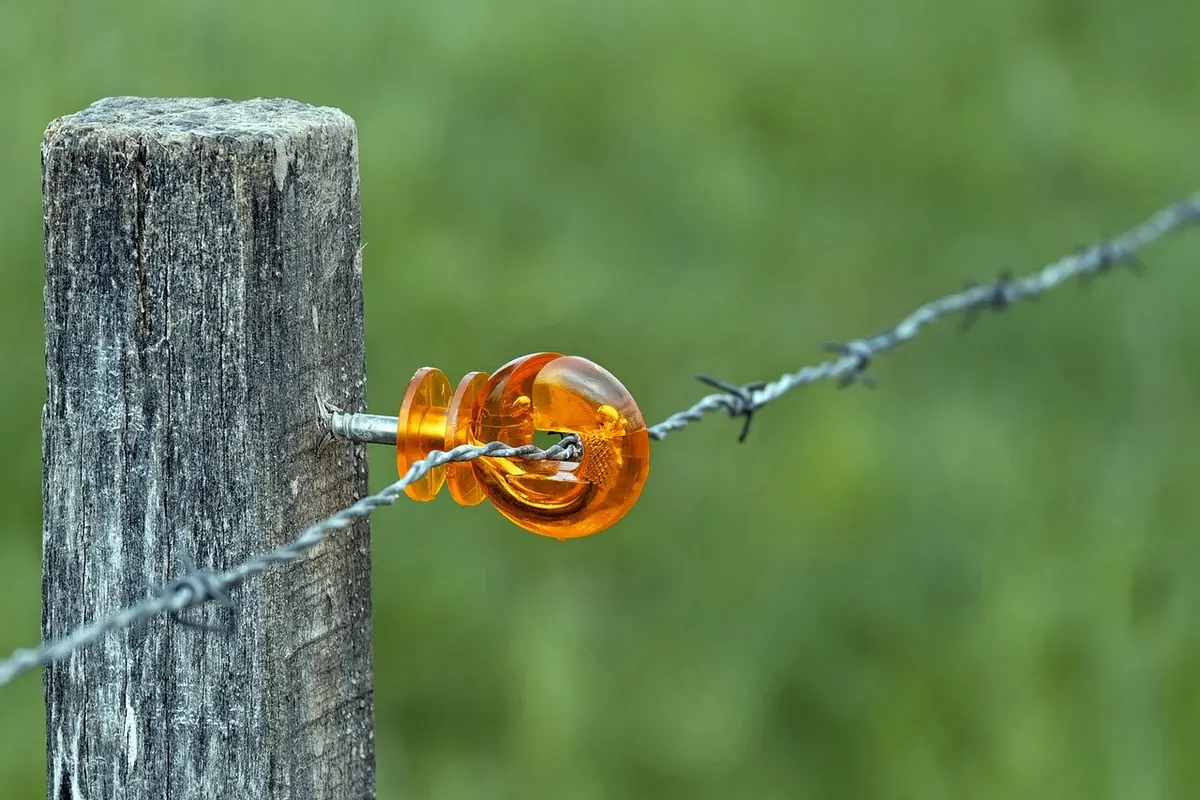
Posts every 3m or so is a reasonable starting point, with a braced strainer at every change of direction. Run two plain wires above the netting if you need extra height for cattle, and consider an offset electric strand for pigs or for strip grazing. Keep barbed wire away from anywhere horses are kept and from places where people duck through; if a public footpath crosses your land, the path must stay usable, so check with your local authority's rights of way team before you alter anything near it.
A properly built wall has two faces, smaller hearting stones packed between them, through stones tying the faces together at intervals, and coping on top. It leans in slightly — the batter — and sits on a shallow foundation of small stones. The ground needs to be reasonably firm; on soft or boggy ground, walls settle and bulge.
The cost is in the labour, and good walling is slow. Where repairs are needed, rebuild the bulge in short sections rather than demolishing a whole length, and match the local stone and style. Cement repairs usually look wrong and trap water, which then freezes and does more damage. If you have a traditional wall in poor condition, ask your local authority or a farming organisation whether any grant support exists for restoring it. Not every site has local stone or a waller nearby, and that alone may settle the argument.
A few habits separate a boundary that lasts from one that nags at you for years.
Whichever you choose, the boundary will only look after itself if you look at it. Two slow walks a year, with secateurs and a hammer in hand, will catch a sagging strainer or a rub on a rail long before it becomes a weekend's work.
Photo: Couleur / Pixabay
A practical checklist of the rural waste mistakes that cost you time, money and good neighbourly relations — from...
A practical guide to when muck goes on, how to get it right for your soil, and the local rules worth checking first.

Learn how to identify, harvest and cook spring stinging nettles safely, with simple steps for picking, blanching and...

A cozy nook for countryside living and nature..
