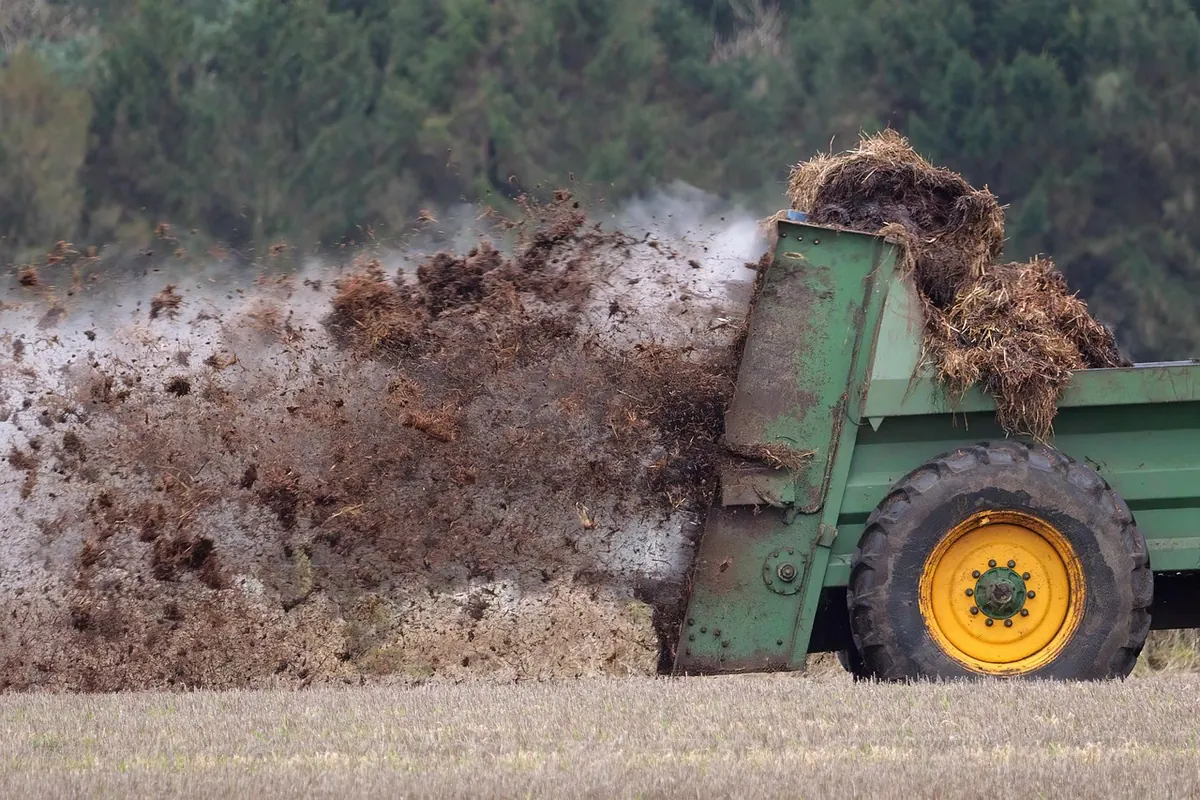
A smallholding runs on muck. It is the quiet economy that turns bedding, weeds, hedge trimmings and last night's droppings into next year's carrots. Get the timing and the quantity roughly right and the soil does half the work for you: it holds water through a dry June, drains after a wet February, and crumbles in your hand instead of setting like brick. Get it wrong and you have spent a weekend barrowing something that either burns your young plants or washes straight into the ditch.
What follows is the rhythm many of us settle into, along with the checks worth making before the fork comes out of the shed.
Manure is not a universal cure, and the land on one smallholding is rarely uniform. The paddock by the gate gets poached every winter; the top field is thin and stony; the polytunnel beds have been worked hard for years. Treat them as three different soils.
Dig a spadeful from each and look at it. Count the worms. Squeeze a handful: if it ribbons out like plasticine you are on clay, if it collapses instantly you are on sand or silt. A soil test every three or four years, for pH, phosphate, potash and organic matter, costs less than a bag of fertiliser and tells you what you actually need. If pH is low, lime does more good than another trailer of muck, because nutrients stay locked up in acid ground no matter how much you add.
The guiding principle is simple: spread when something is growing and will use the nutrients, not when rain will carry them off the field. Everything else is detail.
After harvest and before the ground gets cold is the classic spreading time. Grassland still has roots working, stubbles can be sown with a cover crop to catch what the muck releases, and there is usually enough warmth left for soil life to start breaking things down. Spread on land that is dry enough to carry a tractor or a barrow without smearing, and on slopes, work across the contour rather than straight down.
Frozen, snow-covered or waterlogged ground should not receive muck. Nothing grows, nothing takes it up, and a thaw turns your hard work into run-off. This is the season for building and turning heaps, emptying the hen house onto the compost bay, and letting worms work on anything you spread earlier. Keep the heap covered with a tarpaulin or a layer of straw so rain does not leach the goodness out of it.
As the ground warms and grass starts moving, a lighter dressing goes further than a heavy one did in October. Spring is also the moment for well-rotted muck on vegetable beds a few weeks before planting, so the soil has time to settle and the worms have time to pull it down. Fresh manure at this point is a mistake: it is too strong for seedlings and too attractive to foxes and dogs.
After the hay crop, a thin coat on grazing ground keeps the sward thick going into autumn. Around the garden, summer is for compost and mulches rather than raw muck, laid on damp soil and covered with a little straw or grass cuttings.
Fresh manure is powerful stuff and awkward to handle. It can scorch roots, it carries viable weed seeds, and the ammonia in it is unpleasant for you and the neighbours. Left in a heap it heats up, shrinks, and turns into something dark, crumbly and much easier to use.
As a rough guide:
Two cautions. If animals have been treated recently with wormers or other medicines, some products persist in the dung and can affect insects and plants; check the label and ask your vet before spreading that batch. And never put cat, dog or pig waste on ground used for food crops.
On vegetable beds, a layer of a couple of inches of well-rotted muck is generous enough; on grass, aim for a thin, even coat that disappears within a few weeks. Little and often beats one heroic dumping session.
Spreading is regulated, and the rules differ by country and region, so check the current position with your environment agency or agriculture department before you start. In many areas there are closed periods when nitrogen-rich manures cannot be applied, restrictions in nitrate vulnerable zones, and buffer distances around watercourses, ditches, springs and boreholes. Spreading on frozen, snow-covered, waterlogged or steeply sloping ground is widely restricted for good reason.
Other things worth knowing:
If you are unsure, ask. A quick call to the relevant agency or a word with a local farmer who has been doing this for thirty years will save you a difficult conversation later. For anything involving tenancies, grants or planning, take proper professional advice.
Keep a notebook with the field, the date, what went on and roughly how much. After two or three years you will see your own pattern: which paddock recovers fastest, which bed still needs lime, when the heap is ready. Move the heap once a year, test the soil every few, and let the worms do the rest. Muck well used is the cheapest fertility you will ever own.
Photo: Emphyrio / Pixabay

A practical checklist of the rural waste mistakes that cost you time, money and good neighbourly relations — from...

Hedges, post-and-rail, stock netting and dry stone walls each suit different jobs — here is how to pick the one your...

Learn how to identify, harvest and cook spring stinging nettles safely, with simple steps for picking, blanching and...

A cozy nook for countryside living and nature..
